
NYC SRO housing history
The Policy Disaster That Broke NYC Housing: Six Counterintuitive Takeaways from the Demise of the SRO
New York City’s affordability crisis has many causes. One part of its history is easy to overlook: the loss of single-room occupancy housing, or SROs, which once offered basic, independent rooms to people priced out of conventional apartments.
In 2023, the typical New York City renter household spent 29.5% of its income on housing. For renter households earning under $70,000, the typical share was 54%. Those figures come from the city’s 2023 Housing and Vacancy Survey.
By the middle of the twentieth century, New York had nearly 200,000 SRO units, more than 10% of its rental stock. By 1995, fewer than 40,000 remained, according to the New York City Comptroller’s report on street homelessness and supportive housing. This history does not explain homelessness on its own. It does show how policy choices and redevelopment helped erase one of the city’s lowest-cost housing options.
Takeaway 1: Policy choices helped shrink the SRO stock
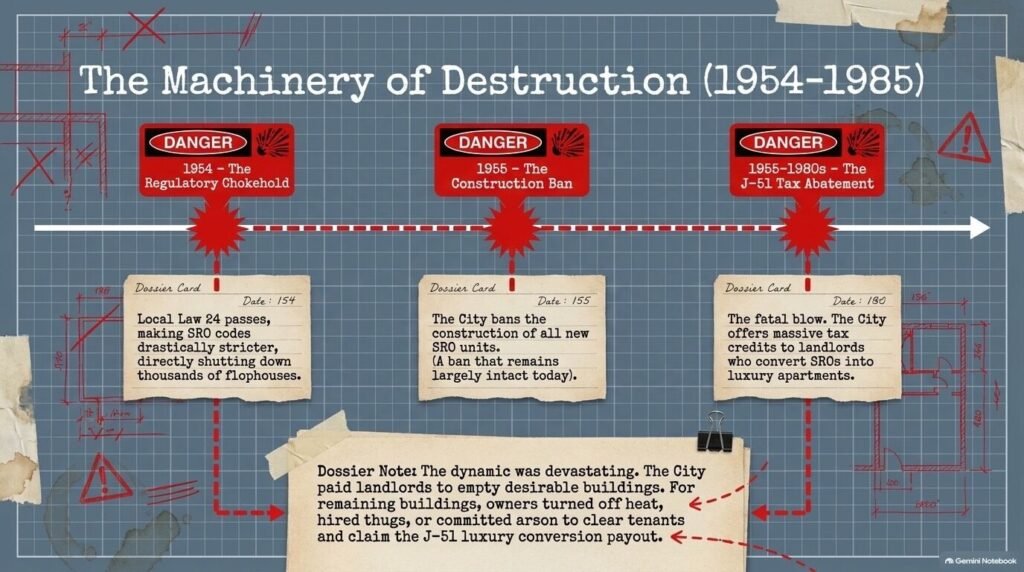
What happened: After World War II, officials and reformers increasingly treated rooming houses as a housing problem to eliminate rather than a low-cost option to improve. Beginning in the mid-1950s, New York adopted rules that restricted new SRO construction and encouraged changes in how existing buildings could be used. Building and zoning changes, along with incentives, helped owners convert SROs into apartments with private kitchens and bathrooms.
Why it matters: The stated goal of many reforms was to improve housing conditions. But when inexpensive rooms disappeared faster than alternatives were created, residents with very low incomes had fewer places to live independently. SRO policy was one part of a much larger set of forces shaping homelessness.
Evidence: New York City Comptroller historical research, the CUNY Law Review study, and housing advocate Dan Margolis’s discussion of the policy’s unintended consequences.
Takeaway 2: The “Bowery bum” stereotype hid a diverse population
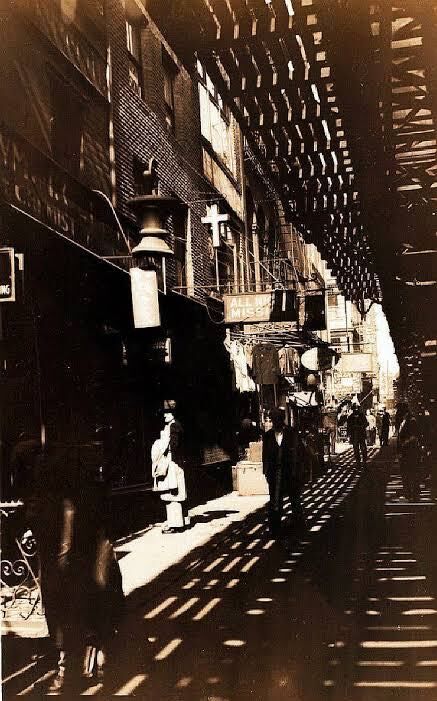
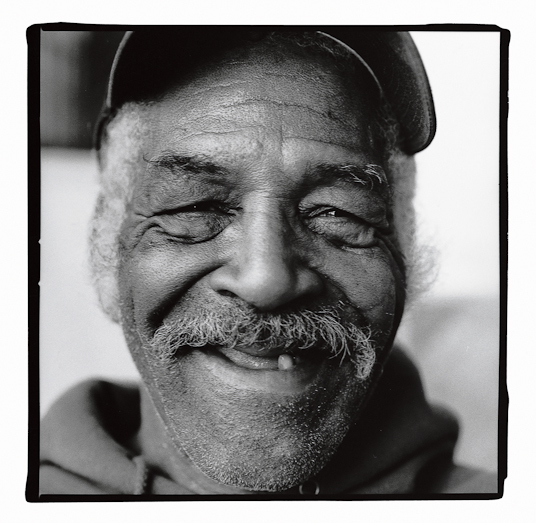
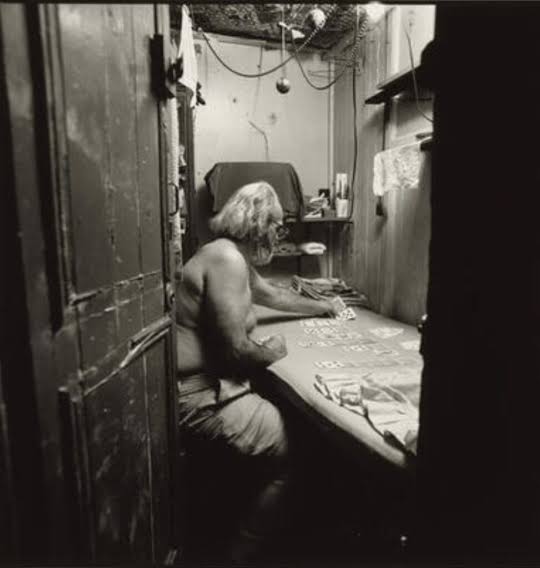
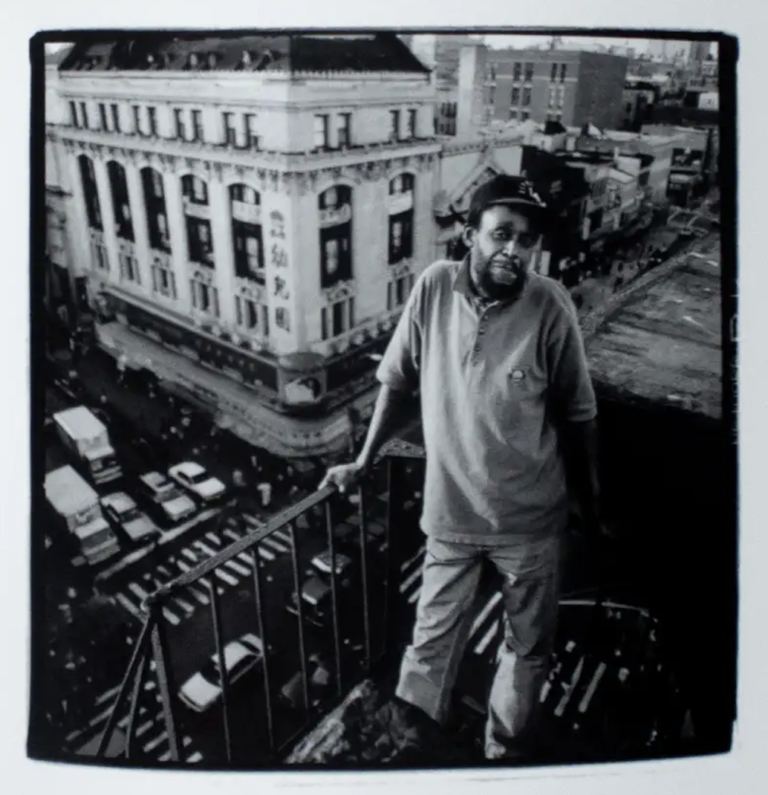
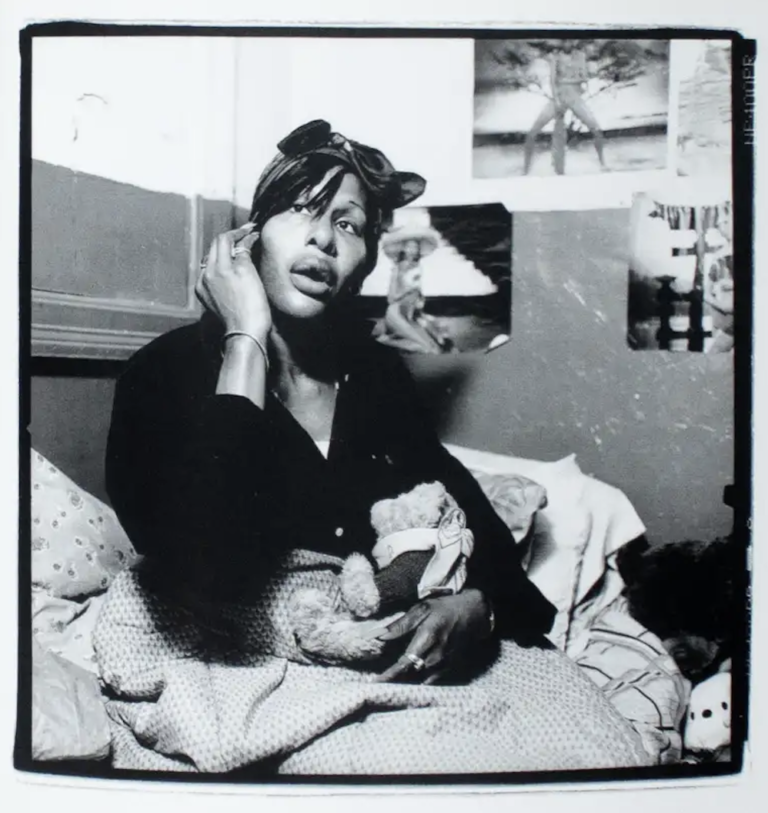
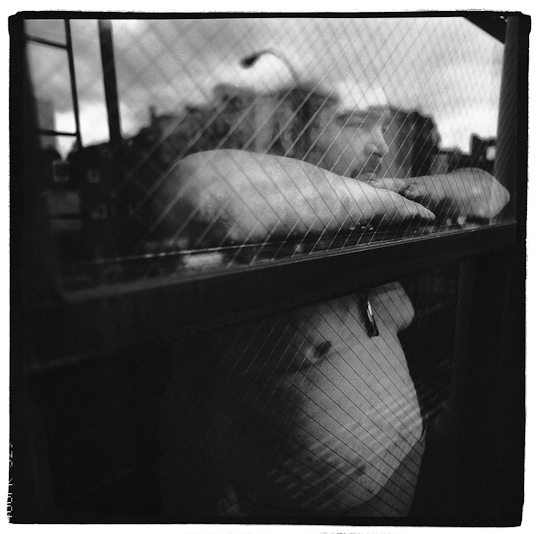
What happened: Mid-century descriptions of SRO residents often reduced them to caricatures: drunk, disorderly, or in the way of neighborhood improvement. That image obscured the range of people who depended on rooming houses, including low-wage workers, immigrants, veterans, and older adults on small pensions.
Why it matters: Conditions could be harsh, including small rooms, unreliable locks, pests, and the need to keep belongings close while sleeping. Those conditions deserved attention and investment. They did not make the people living there disposable or make displacement a solution. Removing low-cost rooms did not remove the need for them.
Evidence: Historical reporting and the Los Angeles Times’s account of how former residents were once part of the housing market.
Takeaway 3: Tax incentives accelerated SRO conversions

What happened: New York’s J-51 tax program offered benefits for certain residential renovation and conversion projects. In the 1970s, tax incentives and regulatory changes helped encourage owners to convert SRO buildings into apartments with higher rents and private facilities. A CUNY Law Review study reports that nearly two-thirds of the city’s remaining SRO units were eliminated between 1976 and 1981.
Why it matters: The lesson is not that every conversion or renovation was harmful. It is that public incentives shape what owners preserve, what they replace, and who can afford to remain. When policy rewards conversion without protecting low-cost housing, inexpensive rooms can disappear quickly.
Evidence: The CUNY Law Review study and the New York City Comptroller’s history of SRO housing.
Takeaway 4: Temporary shelter can cost far more than permanent housing assistance
What happened: New York has long relied on private operators to provide temporary shelter. A 2013 New York Times report described some shelter-room payments reaching $3,000 a month for a room without a private bathroom or kitchen. In a different program and a much later year, the Legal Aid Society reported that a single adult on public assistance was allocated $215 per month for rent.
Why it matters: These figures describe different arrangements and dates, so they are not a direct price comparison. Together, they raise a lasting policy question: why is so much public money available for temporary shelter while some people seeking a permanent home have so little assistance?
Evidence: Reporting from The New York Times, the Legal Aid Society, John Jay College, and the New York Attorney General. The discussion also distinguishes the need served by three-quarter housing from documented cases of abuse and fraud.
Takeaway 5: The need for low-cost rooms did not disappear
What happened: Restrictions on legal SRO housing did not erase the need for inexpensive places to live. Some people instead found rooms in unregulated or illegally converted housing, including basement and cellar apartments.
Why it matters: Safety enforcement matters. So does what happens to residents when an unsafe unit is vacated. A durable housing policy needs both safer homes and a realistic path to housing for the people who live in them.
Evidence: New York City Comptroller research on basement and cellar apartments, including its warnings that the available estimates are difficult to establish and should not be treated as a count of illegal SRO units.
Takeaway 6: George Skoularikos shows what was lost
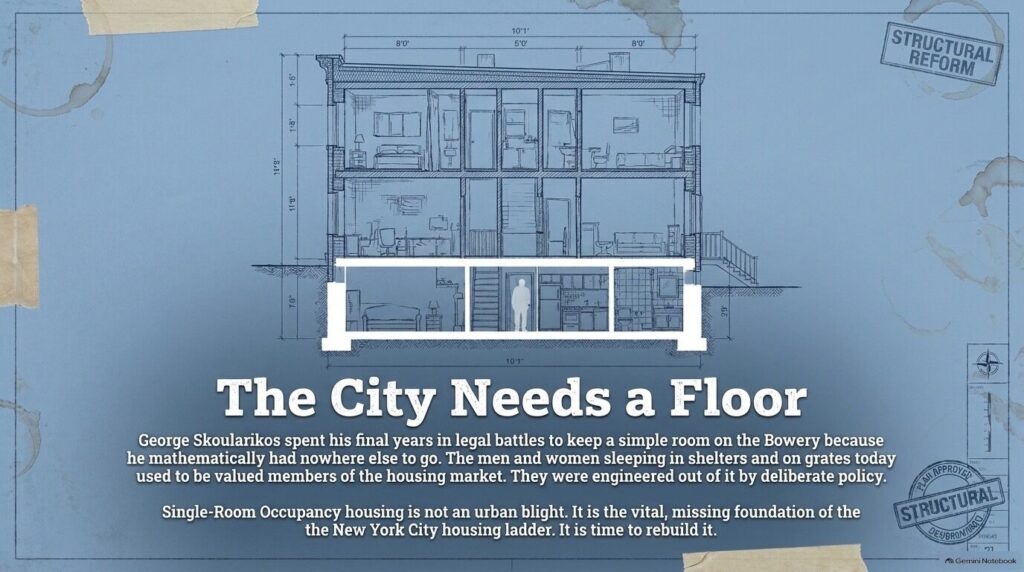
What happened: George Skoularikos, a Greek immigrant and poet, lived for decades in a tiny room at the Stevenson Hotel at 104–106 Bowery. When the building’s owner sought to convert it to a different use, George resisted leaving. He eventually departed for Greece in 2005.
Why it matters: George’s story is not a substitute for the experiences of today’s SRO residents. It is a reminder that a room can be the difference between living independently and having nowhere to go. The Bowery’s remaining residents deserve to be seen as neighbors, not as leftovers from an old New York.
Evidence: The historical marker for 104–106 Bowery and reporting about Casey Neill’s song “Stevenson Hotel.”
What could it mean to bring SRO housing back?
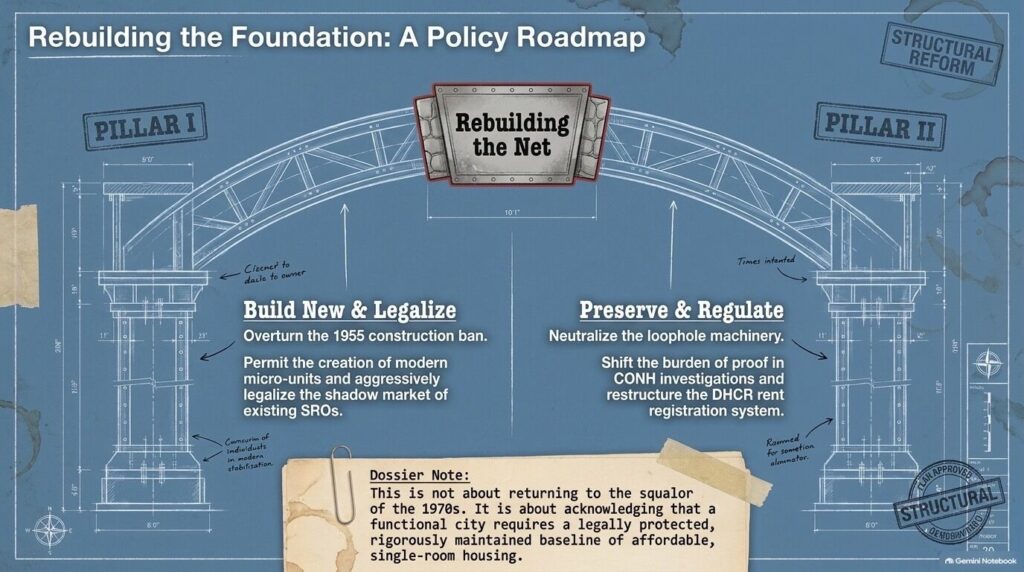
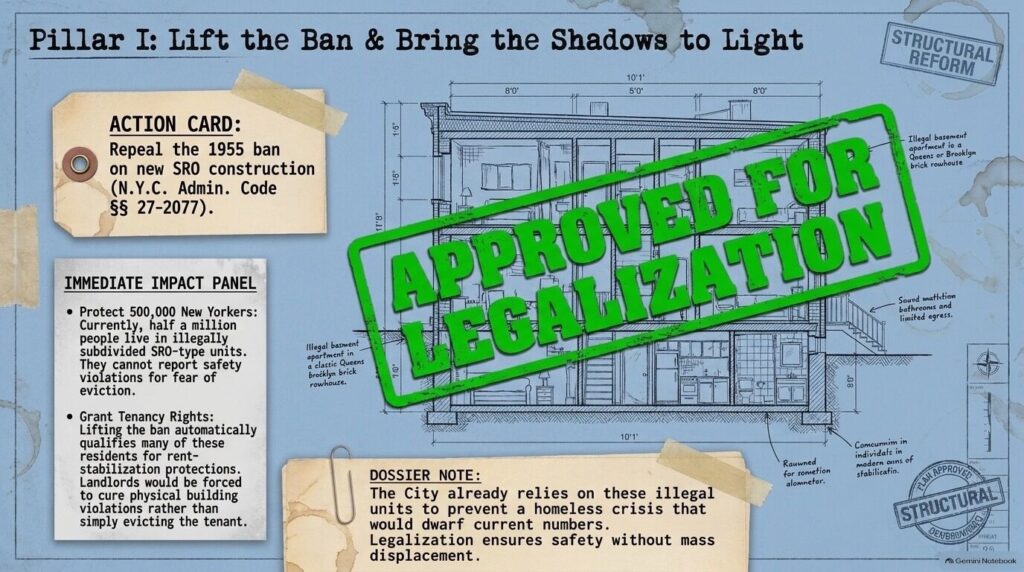
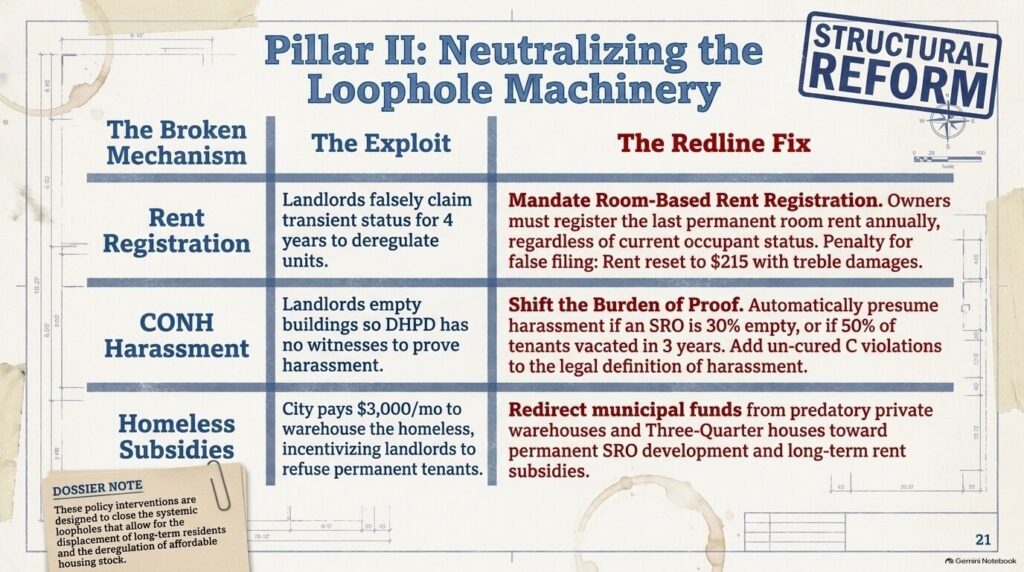
Reversing the loss of low-cost housing requires more than broad promises to build affordable units. New York can revisit the rules and incentives that made small rooms harder to build, preserve existing SROs, and create safe paths for occupied housing to meet code.
The following are policy proposals, not statements of current law:
- Allow new, dignified SRO housing. Review restrictions on single-room housing and establish clear standards for safe, well-maintained rooms.
- Preserve and improve existing SROs. Pair building-safety enforcement with tenant protections and relocation planning so repairs do not become a path to displacement.
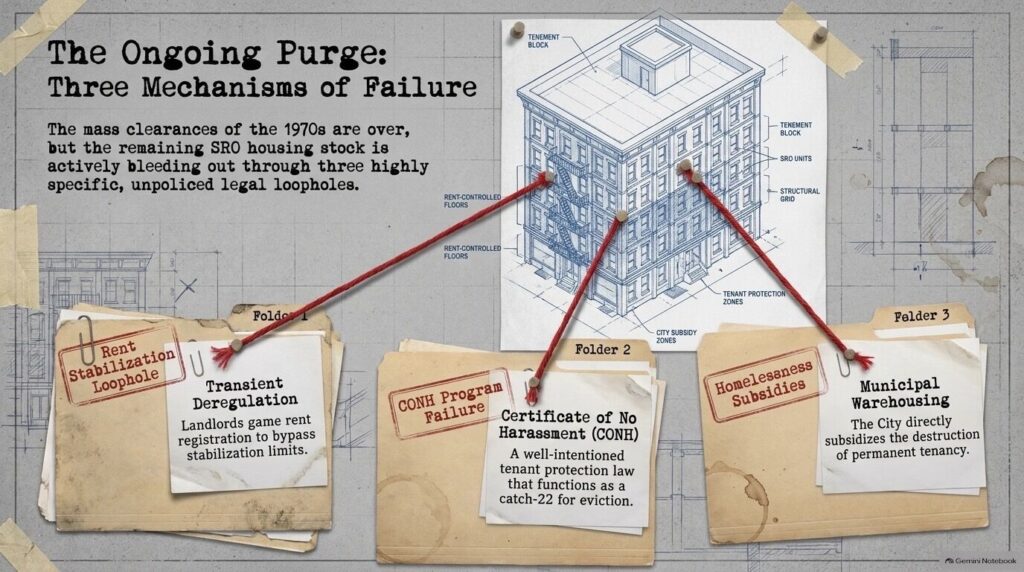
- Strengthen tenant participation in harassment reviews. Give current and former residents meaningful notice and a way to provide evidence when an owner seeks a Certificate of No Harassment.
- Make room-level rent rules clearer. Improve registration and enforcement so tenants and regulators can understand the legal rent and identify suspicious changes.
- Create safe routes to legalize suitable housing. Where occupied units can be brought to code, provide a practical process that protects residents during the work.
For decades, New York has supported redevelopment while spending public money on emergency shelter. It is time to ask whether the city can protect people’s ability to remain housed by restoring a safe, legal, low-cost tier of housing.
The Bowery’s remaining SRO residents are not remnants of a vanished city. They are New Yorkers who still need a place they can afford. The question is whether New York will keep treating inexpensive rooms as a problem or recognize them as part of the housing safety net the city needs.
Sources and further reading
- Abby Aguirre, “Goodbye Sunshine: Bowery to Lose Longtime SRO”, City Limits, 2004
- Records on 241, 243 and 245 Bowery
- New York City Comptroller, “Safer for All”
- New York City Housing and Vacancy Survey, 2023 selected findings
- CUNY Law Review, “Single-Room Occupancy Housing in New York City”
- Los Angeles Times reporting on New York’s SRO history
- The New York Times reporting on shelter-room payments
- The Legal Aid Society on shelter allowances and housing costs
- Office of Justice Programs, “Three Quarter Houses: The View from the Inside”
- New York Attorney General reporting on a three-quarter-house conviction
- New York City Comptroller, “Bringing Basement Apartments Into the Light”
- Historical research on 104–106 Bowery and the Stevenson Hotel